

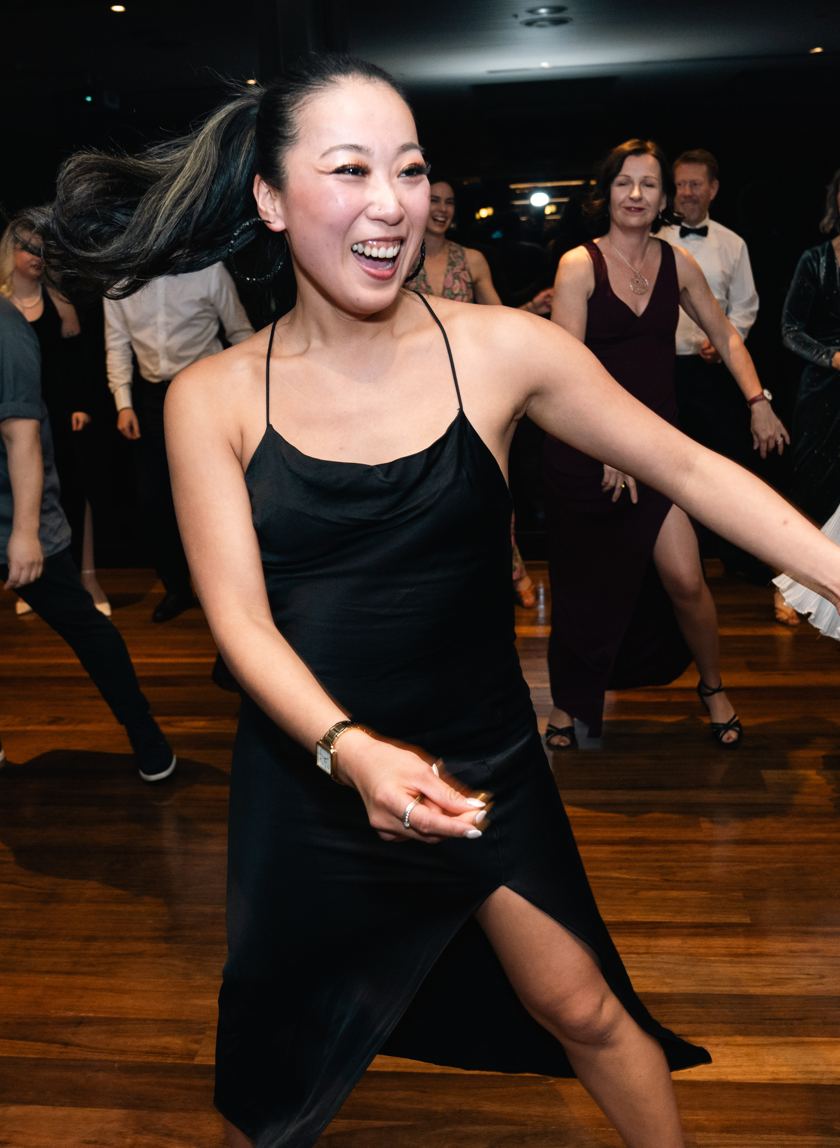
Shorter than you fear, longer than an app promises, and it depends almost entirely on what learn to dance means to you. Here are the honest milestones, and the levers that actually move them.
The milestones that matter
Dancing something recognisable: your first session, genuinely; a basic step to music happens in hour one. Comfortable through a whole song with a partner: weeks, not months, for most adults in regular lessons. Confident on a social floor with strangers: a few months of consistent learning, faster in the forgiving styles like bachata and swing. Genuinely good, the kind people watch: that is a hobby measured in years, and the years are the point.
What actually speeds it up
Frequency beats duration: two shorter sessions a week outlearn one long fortnightly one, because dancing is muscle memory and memory decays. Private teaching compresses the timeline dramatically, for the reasons covered in private versus group. Dancing between lessons, even three minutes in the kitchen, cements more than students believe. And picking a style that fits you matters: fighting a dance you do not love is slow; the right one pulls you along.
What slows it down
Long gaps, rotating teachers who each rebuild your basics differently, and perfectionism, which freezes more adult learners than clumsiness ever has. A personalised program exists to remove all three: one teacher who knows exactly where you are, a cadence that fits your life, and goals sized so you are always succeeding at something.
A deadline changes the maths
Learning to dance and learning one dance are different projects. A wedding couple does not need dancing in general, they need their song, owned completely, by a date, and that is far quicker; the wedding lesson guide covers those timelines honestly.