

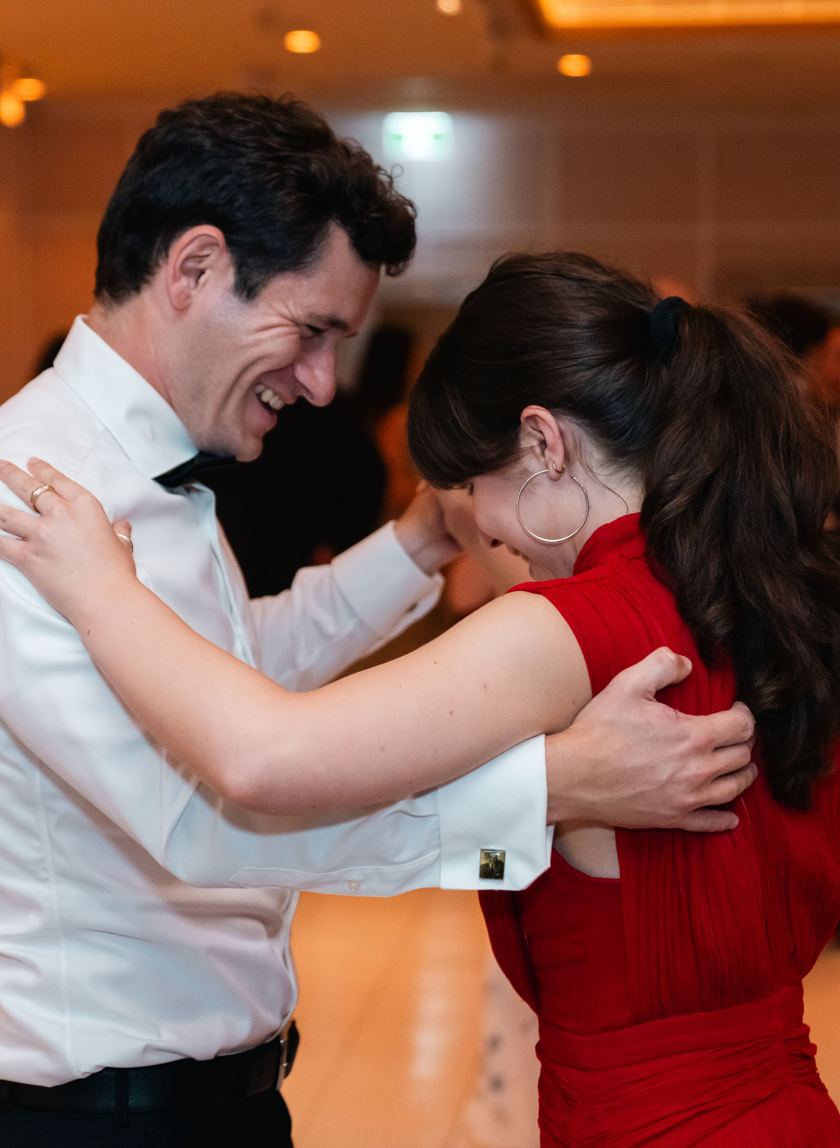
Learning to dance as a couple is one of the nicest things two people can do together, and one of the quickest ways to find out who sulks when a turn goes wrong. The good news is that the friction is predictable, and nearly all of it disappears with a few ground rules. Here is what we have learnt from teaching couples in Sydney since 2014.
Why couples start dancing together
Couples rarely walk into a dance studio for no reason. The usual ones are a wedding on the calendar, an anniversary that deserves more than another dinner, or a cruise or a big birthday where there will be a dance floor and nowhere to hide. Then there is the quiet one: the kids have left home and the evenings suddenly have room in them.
Some couples simply want a hobby they can share that isn't another screen or another restaurant. The reason matters, because it shapes the plan. A couple with a wedding needs their song ready by a date, while a couple after a shared hobby needs a few dances they can enjoy anywhere and a reason to keep coming back. Our page on dance classes for couples in Sydney explains how we set up both.
Dance lessons for couples: the classic friction points
Every couple who has danced together has met at least one of these. Knowing them in advance takes most of the sting out.
- One of you learns faster. Almost always true, and it tends to swap around: one picks up the footwork first, the other the timing, and a month later it reverses.
- Who leads. In traditional partner dancing one person leads and the other follows, and the follower often knows the step first, which makes for some interesting moments.
- Correcting each other. The single biggest cause of tension on a practice floor, and the easiest to fix, because it simply stops.
- Different reasons for being there. One of you wants the wedding to go smoothly, the other secretly wants to be good at this. Both are fine, as long as you have said them out loud.
- Old history. A comment about two left feet at a party years ago can follow you into the room. Leave it at the door.
None of this means you are badly matched. It means you are learning a physical skill side by side, which is a slightly exposed thing to do in front of the person whose opinion matters most.
How to dance with your partner without arguing
We give every couple the same rule: the teacher does the correcting. Not the partner who got it first, not the one who watched a video at lunchtime, the teacher. Your only job with each other is to dance, to say what you feel, and to stay on the same side.
The rule works because a correction from a teacher is just information, while the same sentence from a partner arrives with years of context attached. 'Your frame is collapsing' from us is a technique note. From your spouse, it can sound like a verdict.
It also helps to know that most problems in a partnership are shared. When a turn fails it is usually a little of both, which makes blame a poor tool and curiosity a good one. Our guide to leading and following in partner dancing explains how the two roles actually talk to each other.
What to say instead
Swap 'you're doing it wrong' for 'can we try that again?' or 'that felt different, let's ask'. Say thank you at the end of each dance, even the messy ones. It feels a little formal at first, and then it simply becomes how the two of you dance.
Learning together, and sometimes separately
Most couples learn together in private lessons, which is the heart of how we teach: one teacher, the two of you, and a pace set by you rather than by a room. In private dance lessons the teacher can dance with each of you in turn, share attention fairly, and build a personalised program around your goals as a pair.
Now and then it helps to take a lesson apart. The leader gets time to sort out timing without an audience, the follower gets to feel a clear lead from someone who does it every day, and both bring something back to the shared lesson. It isn't a sign that anything is wrong; often it is the quickest way to stop tripping over the same mistake.
A little preparation makes every lesson go further, and our notes on getting the most from private lessons are worth a read first. Once you are in a program, the studio's small group classes and monthly social parties give you somewhere to use it all. The teachers dance at the parties too, and a song with one of them is a gentle reminder that the tricky moments usually belong to both of you.
Couples dance tips for practising at home
Practice between lessons is where steps settle, and a kitchen is a perfectly good dance floor. The trick is to keep it short and kind.
- Keep sessions short. A few songs after dinner beats an hour of grim repetition on a Sunday.
- Pick one thing. Practise the step your teacher set rather than the whole lesson, and stop while it still feels good.
- Keep the no-coaching rule. If you both get stuck, write the question down and bring it to your next lesson.
- Use real music. Songs you like are more fun than counting in silence, and they prepare you for an actual dance floor.
- End with a dance, not a drill. Put on something slow and just enjoy it. That is the part you will remember.
Dancing with your partner, and what it does for you both
We are dance teachers, not counsellors, so we won't overclaim. But we watch the same thing happen with couple after couple: two people who arrived stiff and polite start laughing at their own mistakes, and the laughing changes the dancing.
Partner dancing asks you to listen without words, to give a little and take a little, and to trust that the other person will be where you expect. Those are handy habits off the floor too. It also hands you a standing date, a stock of private jokes and something to show off at the next wedding, which is why a regular lesson makes one of the better date ideas in Sydney.
If you are curious, the free introductory private session is a relaxed way to try it together. Bring your song if there is a wedding involved, and see what it feels like to dance with the person who is on your side.
Common questions
Is it better to learn to dance as a couple or separately?
For most couples, together is best, because the goal is to dance with each other rather than simply to know the steps. A few separate lessons can help when one partner wants extra time on their role or a tricky passage. Many couples mix both within a personalised program, and your teacher will only suggest it if it genuinely helps.
What if one of us is much more nervous than the other?
That is very common and nothing to worry about. Private lessons have no audience, so the nervous partner can find their feet without feeling watched, and the teacher sets a pace that suits the slower starter rather than the keener one. Nerves usually fade once the first basic step works; our page on lessons for shy beginners says more.
Which dance should couples learn first?
It depends on why you are learning. For a wedding, start with the dance that suits your song. For a shared hobby, the waltz and the rumba are gentle starting points, and a little foxtrot or cha cha gives you something for most parties. Your teacher will suggest where to begin once they know what you want to dance to, and where.
Can same-sex couples learn to dance together?
Of course. Leading and following are roles, not genders, and either partner can learn either one. The teaching is the same for every couple: two people learning to move together, with a teacher who adapts to them. For weddings, we also have a page on LGBTQI wedding dance lessons.