

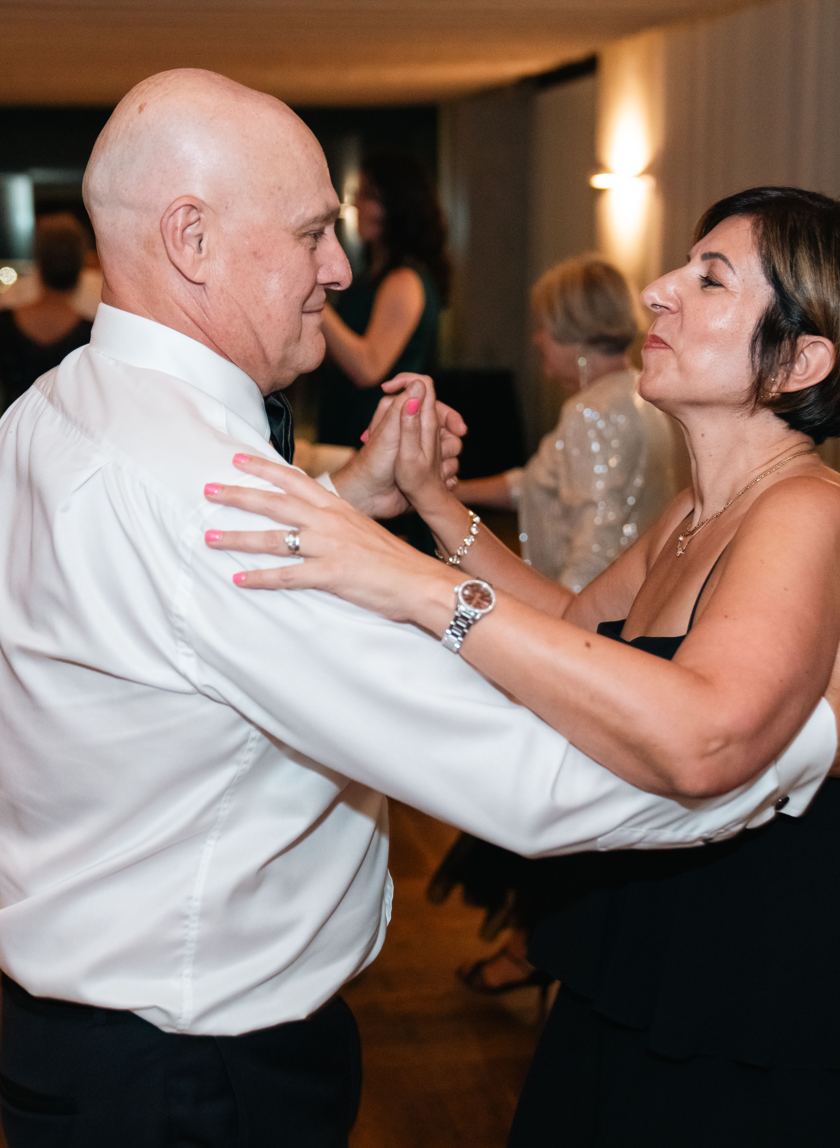
Private dance lessons are the fastest way for an adult to learn to dance, but what you get from them depends a lot on what you bring. A clear goal, a few good questions and short, regular practice between visits will do more for your dancing than any extra hour. Here is what we see our most successful students do, from the teachers on the other side of the hold.
Start with a goal you and your teacher share
The most useful thing you can say in your first lesson is what you want dancing to do for you. Dancing confidently at a family wedding, no longer sitting out the dinner dances, feeling fitter, or simply having something that is yours on a weeknight: each leads to a different plan. Your teacher can only aim the lessons once they know the target.
Goals can be loose. Many students arrive not knowing which dance they want, and finding out is part of the fun. What matters is that the goal is said out loud and revisited every so often, which is how private dance lessons in Sydney work at CareToDance: around your goals, your skill and your pace.
What to expect in a private dance lesson
Most private lessons follow a simple shape, even when the content changes completely from week to week. Knowing it in advance helps you use each part well.
- A quick check-in. You and your teacher talk about how practice went and what felt stuck.
- A review. You dance what you learned last time, so your teacher can see what has settled and what has slipped.
- Something new. Your teacher introduces a figure, a technique point or a new style, breaks it down slowly, then builds it back up.
- Dancing it to music. The new material goes into a real song with your teacher partnering you, so it feels like dancing rather than drilling.
- A short recap. You finish with the one or two things to practise before next time.
Because the teacher partners you, the lesson moves at exactly your pace. Nobody is waiting on you and you are not waiting on anybody, which is a large part of why one-to-one learning moves so quickly, as we explain in private versus group lessons.
Private dance lesson tips: questions worth asking
Good questions get you far more from a lesson, and teachers enjoy them. These are the ones that consistently earn their keep.
- What is the one thing to practise this week? It keeps your practice focused on what matters most right now.
- How should this feel, not just look? Dancing is felt from the inside, and knowing the sensation helps you check yourself at home.
- Is this a leading problem, a following problem, or both? For couples, it settles the argument before it starts.
- How does this connect to what I already know? Linking new figures to old ones is how a repertoire stops being a list.
- What are we working towards next? It keeps the bigger picture in view on the weeks when progress feels slow.
Taking notes and video
Memory is generous during a lesson and mean afterwards. Within an hour of leaving, jot down the names of the figures, the counts, and the one correction your teacher kept coming back to; a note on your phone is fine.
Video is even better, with your teacher's OK. The best moment is the recap at the end: ask to film the new material once at normal speed, and once slowly while your teacher talks it through. Keep the clips for yourself, and watch them before you practise rather than instead of practising.
How to practise between lessons
Practice between lessons is where the learning sets. Short and frequent beats long and rare: a few minutes most days does more than one heroic session the night before your lesson, because dance steps live in muscle memory and muscle memory fades with gaps.
You do not need a partner or a big room. Footwork and counts can be practised alone in the kitchen, posture at the bus stop, and a hallway is plenty for a waltz box step. If you practise as a couple, keep sessions short and friendly and resist the urge to teach each other; take any disagreements to your teacher instead.
Consolidate with group classes and social nights
Private lessons build the skill, and group classes and social nights teach you to use it. In a small group with students at a similar level, you dance the same figures with different partners, which shows you quickly whether your lead or follow really works. At our monthly social parties you put it all to music on a real floor, with teachers dancing alongside you.
For students in a program, group classes and practice nights are included, so treat them as part of the learning rather than optional extras. Every hour on a social floor makes your next private lesson more productive, because less of it is spent re-learning.
Consistency over cramming, and how programs are planned
A steady rhythm of lessons beats bursts of intensity followed by long gaps. Each lesson then builds on the last instead of rebuilding it, and the whole thing feels like progress rather than repetition. Our article on how long it takes to learn to dance explains why frequency matters more than total hours.
Planning starts at the free introductory private session. Your teacher sees you dance, hears your goals, and then recommends a personalised dance program suited to your goals, skill and learning pace. Prices are quoted per program rather than off a rate card, and our pricing page explains how that works.
Common questions
How often should I have private dance lessons?
Weekly is a comfortable rhythm for most adults learning to dance socially, because it leaves time to practise without long gaps for steps to fade. People working towards a date, such as a wedding, often step up the pace as the day gets closer. Your teacher will suggest a cadence that suits your goal, your diary and how quickly you like to move.
Can I have private lessons as a couple?
Yes. Couples share the lesson, and the teacher partners each of you as needed before helping you dance together. It suits weddings, anniversaries and couples who simply want a hobby they can share, and it is often the calmest way for two beginners to learn. Our couples dance classes page explains how those lessons are shaped.
What should I bring to a private dance lesson?
Comfortable clothes, shoes with a smooth sole you can turn in, a bottle of water, and your phone for notes or video. If you are preparing for an event, bring the song and, where it matters, the shoes you will wear on the day. Nothing else is needed, and that includes a partner if you are learning on your own.
Is it normal to feel worse before I get better?
Very. There is usually a stage, a few weeks in, where you understand more than your feet can yet do, and dancing feels clumsier than it did at the start. It is a sign your standards have risen, not that you have stalled. Keep turning up and keep practising, because it passes, and the next stage often feels like a jump.