

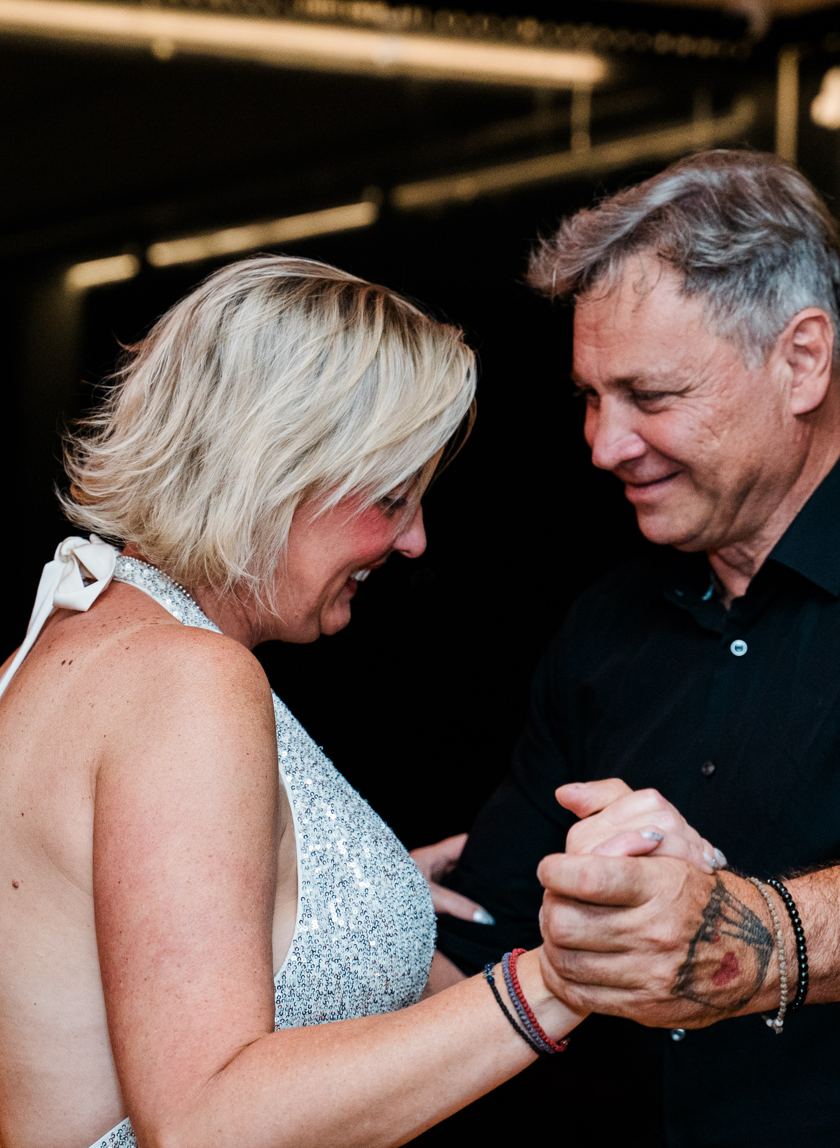
Dance as exercise is better than most people expect: it works your heart and lungs, builds strength in the legs and core, and trains balance and posture, all while you are thinking about the music rather than the clock. How hard it works you depends on the dance and on how you dance it. Here is the honest picture, including what to expect for weight loss.
What kind of exercise dancing is
Dancing is a mixed workout rather than one thing. Done continuously through a song or a lesson, it is aerobic exercise that gets you breathing harder. Every step is also a controlled weight transfer, which builds balance and coordination, and holding a good frame works the muscles of the upper back and core.
- Aerobic fitness. Moving steadily through song after song raises your heart rate, more so in the livelier dances.
- Leg strength. Rising onto the balls of the feet, lowering with control and travelling across the floor work the calves, thighs and glutes.
- Core and posture. A ballroom hold asks you to stand tall and stay connected through the torso, which desk workers often notice first.
- Balance and coordination. Turning, stepping backwards and changing direction on cue train skills that most gym routines skip.
Most styles are also low impact, with no jumping or pounding, which is why dancing suits people who have given up running. That mix is what our dance classes for fitness are built around.
Is ballroom dancing good exercise?
Yes, and more than it looks. Good ballroom dancing is meant to appear effortless, which hides a lot of work. A foxtrot or waltz asks you to keep your frame, control the rise and fall and travel smoothly around the room for the whole song, and as a beginner you may well feel it in your legs the next day.
That said, a relaxed social waltz is moderate exercise, not a sprint. The Viennese waltz, which turns continuously at speed, is a different story, and most students are surprised how quickly it gets them puffing. If you want to understand how ballroom and Latin differ physically, our guide to ballroom versus Latin explains it.
How intensity differs between dances
Not all dances are equal as exercise, which is useful: you can choose the level that suits you and build up. Roughly speaking, they fall into three bands.
- Gentle. Waltz, rumba, foxtrot and bolero move at a calm, walking pace and are ideal for building posture, balance and confidence.
- Moderate. Cha cha, ballroom tango and merengue add quicker footwork and sharper action without leaving most people breathless.
- Lively. Samba, Viennese waltz, swing, Lindy hop and hustle keep you moving fast and work your heart and lungs much harder.
How you dance matters too. The same beginner cha cha can be a gentle sway or a proper workout depending on the size of your movement and how continuously you dance. Many of our students start gentle and drift towards the livelier styles as their fitness grows.
Why people keep dancing when they quit the gym
The best exercise is the one you actually do, and this is where dancing quietly wins. Most people who drop out of a gym are not lazy; they are bored. A treadmill gives you nothing to think about except how long is left. A dance lesson gives you a step to master, a partner to work with and music to follow, so the time disappears.
Dancing also comes with built-in reasons to show up: a teacher expecting you, a program you are working through, friends at the monthly social parties and the satisfaction of improving. Those are exactly the qualities that make any habit last, as we explain in our guide to hobbies for adults that stick.
How dancing fits Australia's activity guidelines
The physical activity guidelines for Australian adults recommend being active on most days, preferably every day, with a variety of activity: moderate to vigorous activity on most days, muscle-strengthening activities on two or more days a week, and functional activities targeting mobility, balance and coordination on several days a week. They also point out that some activities count towards more than one recommendation.
Dancing is a good example. A lively lesson or social night can count as moderate to vigorous activity, and the turns, weight changes and direction changes are exactly the balance and coordination work the guidelines describe. Where it is lighter is strength: dancing works the legs and core, but it will not replace a dedicated strength session, so pairing it with some resistance work covers the gap.
Older Australians have their own version of the guidelines with a similar emphasis on balance and mobility, which we cover in the benefits of dancing as you get older.
Dancing for weight loss: realistic expectations
Dancing uses energy like any physical activity, and the livelier styles use more of it. We will not give you a number, though, because how much you burn depends on the dance, your effort, your size and how continuously you move, and anyone quoting a precise figure is guessing.
Honestly, weight loss depends mostly on your overall habits, including what you eat, and no single activity does it alone. Where dancing helps is consistency: it is enjoyable enough to keep doing week after week, and steady activity sustained over months is what changes things. Many students notice other changes first, such as more stamina, better posture and more energy, well before anything shows on the scales.
If fitness is your main goal, say so at your free introductory private session and your teacher can lean your program towards livelier styles. Our adult dance classes are built around personalised programs, so your goals shape what you learn.
Common questions
Is dancing better exercise than walking?
They are different rather than better or worse. Brisk walking is excellent, simple aerobic exercise. Dancing adds turning, stepping backwards and sideways, coordination with music and a partner, and bursts of higher intensity in the livelier styles. Many people do both: walking for the everyday base, and dancing for balance, variety and the social side.
How often should I dance to get fitter?
More than once a week works best, combined with other movement on the days in between. Regularity matters more than any single big session, because fitness builds from repeated effort. Lessons, social nights and short practice sessions at home all count. Your teacher can suggest a rhythm that suits your goals, your schedule and your current fitness.
Does dancing tone your body?
Dancing builds strength and control in the legs, glutes and core, and it improves posture, which changes how you carry yourself. It is not a heavy strength workout, so if building muscle is your main aim, add some resistance training. Most students notice they stand taller and move more easily well before they notice any change in shape.
Is dancing good exercise for complete beginners?
Yes, because you can start at whatever intensity suits you. Beginners usually begin with gentle styles such as waltz or rumba, learning the steps slowly before adding speed. As your fitness and confidence grow, you can move on to livelier dances. No experience, partner or particular level of fitness is needed to start.