

The best hobbies for retirees do more than fill time: they give the week a shape, keep you moving, and put you among people you look forward to seeing. Work quietly provided all three for decades, so retirement means rebuilding them on purpose. Here is a practical guide to doing that in Sydney, from volunteering to bushwalks to the dance floor.
Why structure and purpose matter after work ends
The first months of retirement often feel like a long holiday, and they should. Then, for many people, the days start to blur. Without a reason to be somewhere at a set time, it is easy to drift into a pattern of errands, screens and not much else.
Work gave you more than income. It gave you a reason to get dressed, problems to solve, people who expected you and a sense that your effort mattered. The most satisfying retirements we see replace each of those deliberately, usually with two or three regular commitments that anchor the week and leave plenty of free time around them.
Think of hobbies as appointments rather than options. A weekly class, a volunteering shift or a standing walk with friends turns good intentions into a routine, and routine is what makes the free days feel like freedom rather than emptiness.
Staying social in retirement
Work friendships tend to fade faster than anyone expects once the shared workplace is gone. Partners may retire at different times, children are busy with their own lives, and friends move closer to grandchildren or out of the city. A social life that used to happen automatically now needs a little planning.
The fix is the same at 65 as it was at 25: see the same people regularly while doing something together. Look for activities that meet weekly in small groups, where newcomers are welcomed and nobody needs prior skill. That is a big part of why so many people in their 60s and beyond join our dance classes for adults over 50, and why some of them started after 70.
If you want the longer version, our guide to making friends as an adult in Sydney covers how to turn familiar faces into real friends.
Activities for retirees: a practical menu
Most people do best with a mix: something social, something active and something that uses the mind. These are the main types worth exploring, all widely available across Sydney.
- Volunteering. Hospitals, charity shops, food rescue services, bush regeneration groups, museums and tutoring programs all need reliable people, and a regular shift brings purpose and a ready-made team.
- Learning. Community colleges, adult education courses, library talks and language classes let you study purely for interest, with no exams unless you want them.
- Walking and the outdoors. Harbour foreshore paths, coastal walks and national parks make Sydney a city built for walking, and a walking group adds company and a reason to go on grey mornings.
- Creative pursuits. Painting, pottery, woodwork, choir, photography and writing a family history give you something tangible to show, and to pass on.
- Travel planning. Researching a trip, learning some of the language and preparing a skill to use there, such as dancing on a cruise, makes the anticipation half the pleasure.
- Community involvement. Service clubs, community gardens, residents' associations, community sheds and grandparent groups connect you with your neighbourhood and with people at every stage of life.
Staying active in retirement without a gym
Moving well is what keeps every other hobby possible, from carrying grandchildren to climbing the steps at a lookout. Australia's physical activity guidelines for older adults put real weight on strength, mobility, balance and coordination, not only on walking further or faster.
You do not need a gym membership to cover that. Walking looks after your heart and lungs, gardening and carrying the shopping build strength, and activities that change direction and pace, such as social tennis, tai chi or dancing, keep balance and coordination sharp. The best mix is the one you enjoy enough to keep doing every week.
Social dancing: movement, music, memory and company
If you wanted one activity that covers most of the menu above, social dancing comes close. It is gentle exercise you can pace to suit you, with a waltz or rumba at walking speed and livelier dances when you are ready. Every change of direction works your balance and posture.
It also keeps the mind busy. Learning a sequence, recalling it the following week and adjusting to a partner and the music in real time is a genuine mental workout, and the music lifts the mood of almost everyone in the room. We go further into this in our piece on the benefits of dancing as you get older.
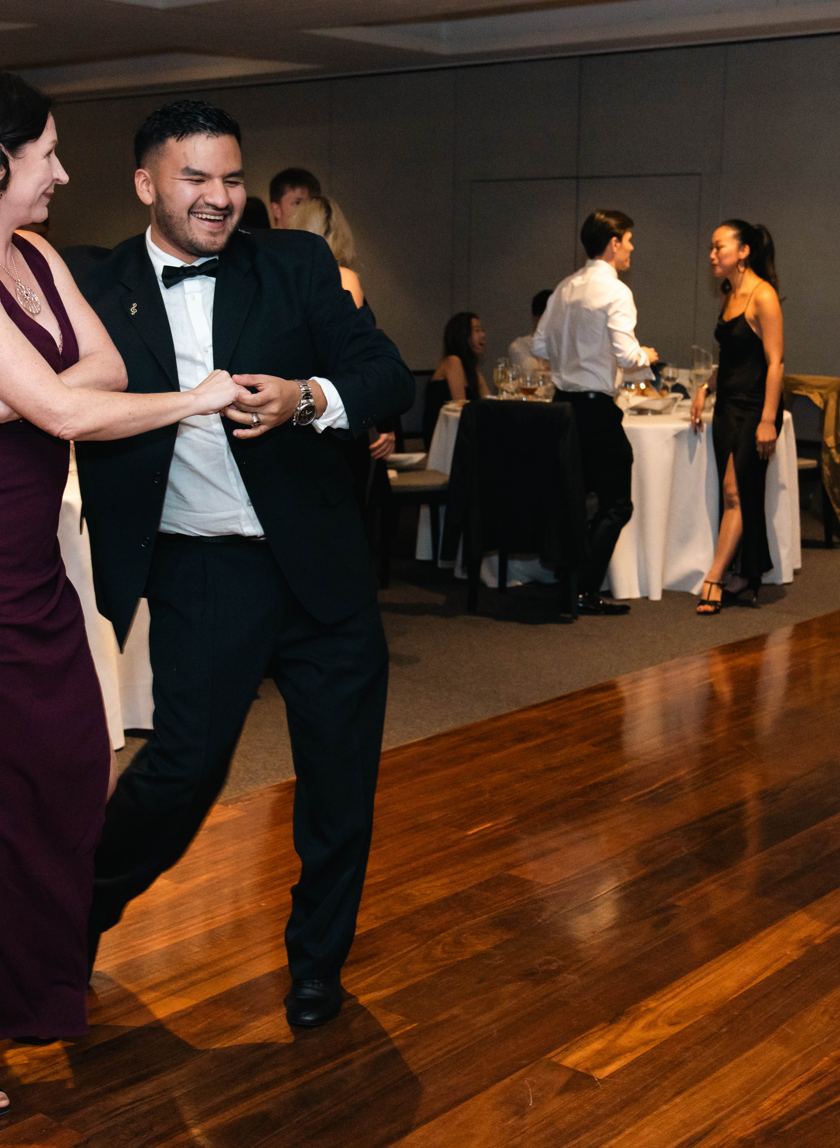
And it is unmistakably social. Many of our students are in their 60s and beyond, some began after 70, and plenty come on their own. Social dance classes at our Rozelle studio sit alongside monthly themed social parties, where students try out new steps and the teachers dance too, plus dinner and dance events through the year.
How to start a new hobby in retirement
Give yourself permission to try several things and keep only what you love. A good approach is to sample widely in the first few months, then commit to two or three regular activities and protect them in your diary like the appointments they are.
Expect the beginner stage to feel awkward, and do not let it decide for you. Everyone in a new class was a beginner once, and in retirement you finally have the time to get through that stage properly. If dancing is on your list, our free introductory private session is a gentle first step: no experience or partner needed, and you can come alone or as a couple. Afterwards your teacher recommends a program paced to suit you.
Common questions
What is the best hobby for a retiree?
The best one is the hobby you will keep doing, and that usually means it is social, regular and gently challenging. Many retirees settle on a mix: one active pursuit, one creative or learning pursuit, and one that is mostly about people. Social dancing is popular because it covers exercise, learning and company in a single activity.
How can retirees meet new people in Sydney?
Join things that meet regularly in small groups: volunteering rosters, walking groups, community college courses, choirs, community gardens and dance studios. Turn up consistently, arrive a little early, and suggest a coffee afterwards once the faces become familiar. Friendships in retirement grow the same way they always have, through repeated time spent together.
Is 70 too old to start dancing?
Not at all. Some of our students started after 70, and many are in their 60s and beyond. Social dancing scales to the body you have: steps are taught at walking pace, private lessons let your teacher adapt everything to you, and you choose how lively to go. If you have a health condition, check with your doctor first, as you would before any new activity.
What can retired couples do together?
Shared learning works well because you start as equals. Couples often enjoy walking holidays, cooking courses, a language before a big trip, volunteering together or learning to dance. Dancing is especially rewarding because you build a skill to use together at family weddings, anniversaries and on cruises, and it gives you a standing date every week.